
















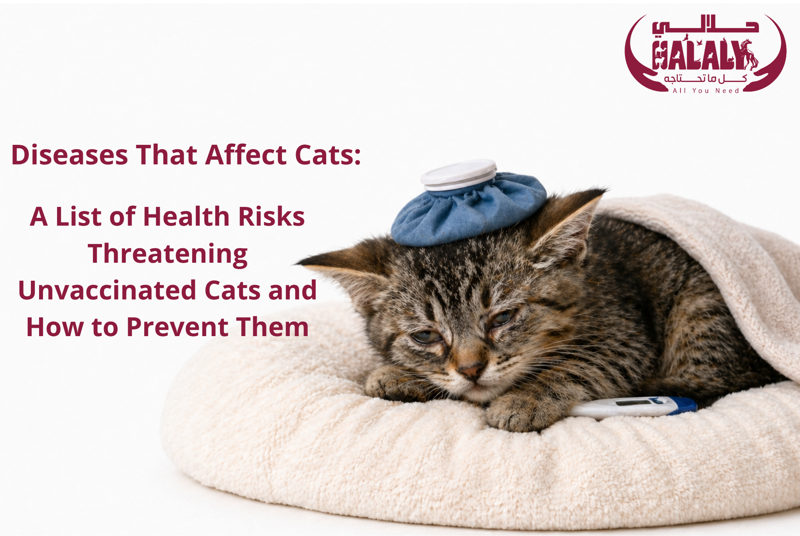
Cat health is not just a luxury—it’s a core responsibility for every owner. Many cat owners only notice a problem after it worsens, even though most diseases that affect cats start with simple signs that are easy to spot if you pay attention. It’s not just about knowing the disease, but understanding its causes, symptoms, and how to deal with it quickly before it becomes a real threat.
The issue is that some diseases that affect cats can be contagious or develop very rapidly, especially if the cat is young or has a weak immune system. The more familiar you are with cat diseases and their symptoms, the better you can act at the right time and protect your cat from serious complications.
What are the most common diseases that affect cats?
Diseases that affect cats vary between viral, bacterial, and parasitic infections, while others are linked to nutrition or environment. Knowing the main types helps with early detection and proper handling.
Common cat diseases and their symptoms
Some of the most widespread cat diseases and their symptoms include:
-
Respiratory infections: sneezing, runny nose, and difficulty breathing
-
Digestive issues: vomiting, diarrhea, and loss of appetite
-
External parasites: fleas and ticks causing constant itching
-
Internal parasites: worms affecting weight and digestion
One key thing about symptoms of cat diseases is that they often start mildly—like lethargy or low activity—but can worsen over time if ignored.
Causes of disease transmission among cats
Diseases that affect cats are commonly spread through:
-
Direct contact with infected cats
-
Sharing food and water bowls
-
Unclean or humid environments
-
Lack of vaccinations
Infections spread quickly, especially in multi-cat environments, making prevention more important than treatment.
Diseases that affect kittens and their risks
Kittens are more vulnerable because their immune systems are not fully developed, making diseases that affect young cats more dangerous than in adults.
Why are kittens more prone to diseases?
The main reasons include:
-
Weak immunity
-
Incomplete vaccination schedules
-
Sensitivity to environmental changes
-
Difficulty resisting viruses
That’s why even a minor symptom can quickly turn into a serious issue in kittens.
Common diseases that affect kittens
Some of the most common diseases that affect kittens are:
-
Panleukopenia (Parvo): one of the most deadly cat diseases
-
Severe eye infections
-
Acute diarrhea caused by parasites
-
Respiratory infections
These conditions require immediate attention, as delays can lead to loss of the kitten.
Deadly cat diseases you should be aware of
Some deadly cat diseases don’t leave much room for treatment if not detected early.
The most dangerous viruses threatening cats
Among the most well-known:
-
Feline Immunodeficiency Virus (FIV)
-
Feline Leukemia Virus (FeLV)
-
Parvovirus
These viruses severely weaken the immune system, making cats vulnerable to other infections.
How to prevent deadly cat diseases
Preventing serious diseases that affect cats depends on:
-
Following a proper vaccination schedule
-
Isolating new cats before introducing them
-
Maintaining a clean environment
-
Providing balanced nutrition
These steps significantly reduce the risk of infection.
Symptoms of cat diseases you should never ignore
Many owners notice changes but underestimate them, even though they may clearly indicate cat diseases and their symptoms.
Signs that your cat may be sick
Common symptoms of cat diseases include:
-
Loss of appetite
-
Lethargy or excessive sleeping
-
Unusual hair loss
-
Behavioral changes (aggression or isolation)
-
Vomiting or diarrhea
Any of these symptoms lasting more than two days should not be ignored.
When should you visit the vet?
Don’t wait too long if you notice:
-
Difficulty breathing
-
High temperature
-
Bleeding or unusual discharge
-
Rapid weight loss
Early intervention can save your cat’s life.
Eye diseases in cats
The eyes are one of the most sensitive parts of a cat’s body, and eye diseases in cats can indicate a deeper issue.
Common eye problems and their causes
Eye diseases in cats may include:
-
Conjunctivitis
-
Yellow or green discharge
-
Redness or swelling
-
Light sensitivity
Causes range from viral and bacterial infections to allergies.
Treatment and prevention of eye diseases in cats
Treatment depends on the cause, but prevention includes:
-
Regular eye cleaning
-
Avoiding dust exposure
-
Monitoring unusual discharge
Ignoring eye problems can lead to serious complications.
Cat diseases and their treatment
Understanding cat diseases and their treatment helps you make the right decision quickly.
Common treatment methods
Treatment varies depending on the condition:
-
Antibiotics for bacterial infections
-
Anti-parasitic medications
-
Fluids to treat dehydration
-
Therapeutic nutrition
Never use medication without consulting a veterinarian.
The role of nutrition and care in recovery
Nutrition plays a key role in treating diseases that affect cats:
-
High-protein food
-
Vitamin supplements
-
Clean water at all times
Proper care can significantly speed up recovery.
How to protect your cat from diseases that affect cats
Prevention is always easier and less costly than treatment, especially with diseases that affect cats.
Importance of vaccinations and preventive care
Vaccinations protect against the most dangerous deadly cat diseases, such as:
-
Parvo
-
Leukemia
-
Respiratory diseases
Sticking to vaccination schedules from an early age is essential.
Daily tips to keep your cat healthy
-
Keep your cat’s environment clean
-
Provide healthy, balanced food
-
Monitor behavior and any changes
-
Schedule regular vet visits
These simple habits greatly reduce the risk of diseases that affect cats.
Taking care of your cat’s health starts with awareness. Every piece of information you learn today can protect your cat from a serious problem tomorrow. If you’re looking for trusted products, practical advice, and everything you need for proper cat care, visit Halaly and discover the best solutions to keep your cat healthy, safe, and comfortable.